

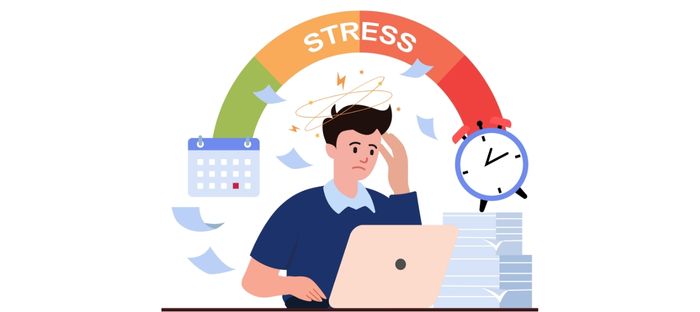
Work pressure can quietly erode focus, health, and satisfaction, but you can stop that trend by using targeted stress-management practices that fit your role and workplace. When you learn to identify stressors, set boundaries, and apply practical techniques — both personal and organizational — you protect your performance and well‑being while boosting long‑term career success.
This post will show how to recognize what drains you, which strategies actually work, and how leaders and teams can create a supportive environment that strengthens resilience. Expect clear, actionable steps you can use at once to measure stress, reduce its impact, and turn better stress management into greater happiness and sustained success.
Understanding Workplace Stress
Workplace stress affects your thinking, health, and day-to-day performance. Identifying what triggers stress, how it shows up, and when it becomes harmful helps you take specific steps to manage it.
Definition of Workplace Stress
Workplace stress occurs when job demands exceed your perceived ability or resources to cope. It can be acute—like a missed deadline—or chronic, such as ongoing role ambiguity or unmanageable workloads.
Stress is not the same as pressure; pressure can motivate, while stress impairs functioning when sustained. You should note both external demands (deadlines, changes, interpersonal conflict) and internal reactions (worry, rumination, perfectionism) when you assess stress.
Understand that physiological activation (increased heart rate, tension) and cognitive effects (difficulty concentrating, negative thinking) are central to the definition. These responses are normal short-term, but repeated activation without recovery leads to burnout and health problems.
Common Causes of Stress at Work
High workload and unrealistic deadlines top the list for most employees. You face stress when expectations exceed time or resources, or when tasks require constant multitasking.
Poor role clarity and conflicting instructions from managers create chronic uncertainty. You also experience stress from lack of control—no input over schedules, methods, or priorities.
Interpersonal issues—bullying, harassment, or persistent conflict—drive emotional stress and reduce safety. Organizational changes, job insecurity, and inadequate support or training amplify the problem. Finally, mismatch between job demands and your skills or values increases strain and disengagement.
Signs and Symptoms of Stress
Physical signs include headaches, sleep disturbances, digestive issues, and muscle tension. Noticeable changes in energy—persistent fatigue or restlessness—also indicate mounting stress.
Cognitive and emotional symptoms show as concentration problems, indecision, irritability, anxiety, or low mood. You may find yourself ruminating about work outside hours or experiencing diminished motivation.
Behavioral changes can include increased absenteeism, social withdrawal, reduced productivity, or reliance on alcohol, caffeine, or other coping behaviors. Track patterns over weeks: transient reactions differ from sustained changes that require intervention.
The Importance of Effective Stress Management
You will see how unmanaged stress reduces output, lowers job satisfaction, and harms mental health over time. Practical strategies for workload, relationships, and recovery directly influence your daily performance and long-term well‑being.
Impact of Stress on Productivity
High stress narrows your focus and makes routine tasks take longer. When you juggle multiple urgent deadlines without recovery time, your decision speed and accuracy drop; simple errors and missed details become more frequent.
Chronic high workload also increases absenteeism and presenteeism. You may show up physically but perform below capacity due to fatigue, concentration lapses, or low motivation. That reduces team throughput and raises error-correction costs.
Practical steps you can use include prioritizing tasks with clear criteria, blocking uninterrupted work time, and delegating specific responsibilities. Track how many hours you spend on reactive tasks versus planned work to measure improvement.
Relationship Between Stress and Job Satisfaction
Stressful interactions with supervisors and unclear role expectations directly lower how satisfied you feel at work. If you repeatedly face shifting priorities or poor feedback, your sense of competence and recognition erodes quickly.
Low job satisfaction increases turnover intent and reduces discretionary effort. You stop volunteering for stretch assignments and you withdraw from collaborative initiatives that once energized you. That affects career growth and team morale.
To protect your satisfaction, negotiate clear goals and timelines, request specific performance feedback, and set boundaries on out‑of‑hours communication. Small changes in role clarity and manager behavior often yield noticeable improvements in how you experience work.
Long-Term Effects on Mental Health
Persistent workplace stress raises your risk for anxiety, depression, and sleep disorders. Over months and years, sustained cortisol elevation and disrupted sleep patterns impair memory, emotional regulation, and immune function.
Left unaddressed, these conditions can evolve into clinical problems that require professional treatment and extended leave. That not only harms your quality of life but can derail career trajectories and financial stability.
Early actions—regular exercise, consistent sleep routines, brief daily recovery breaks, and timely access to counseling—reduce progression to chronic mental health issues. Monitor warning signs like persistent irritability, withdrawal, or declining performance and seek support promptly.
Top Strategies for Optimal Stress Management
Focus on practical, repeatable actions: organize your time with clear priorities, protect specific boundaries that prevent overload, and build emotional habits that let you recover quickly from setbacks.
Time Management Techniques
Identify 1–3 top priorities each day and block uninterrupted time for them on your calendar. Use time blocking with 25–50 minute focused intervals and 5–10 minute breaks to maintain energy; track one week to spot recurring interruptions.
Delegate or defer tasks that don’t require your direct input. Create a simple triage rule: Do (high-impact, <2 hours), Schedule (important but non-urgent), Delegate/Discard (low impact). Review your task list at the end of each day to plan the next one.
Use tools that fit your workflow: a shared calendar for meetings, a task manager for project steps, and a single inbox for action items. Limit meetings to a clear agenda and a time cap; decline or shorten meetings that lack outcomes.
Setting Healthy Work Boundaries
Define specific start and stop times for work and communicate them to your team. Turn off work notifications outside those hours and set expectations on response windows (for example: respond within 24 hours to non-urgent messages).
Create role-based boundaries: reserve certain days or hours for deep work, client calls, or administrative tasks. Use a visible status (calendar or chat) so colleagues know when you are unavailable.
Protect recovery routines you control: a 30-minute commute walk, evening device-free time, or a weekly non-work hobby. Reinforce boundaries by scheduling them as fixed appointments on your calendar.
Developing Emotional Resilience
Practice a daily 5-minute reflection: note one stressor, one action you took, and one small result. This builds an evidence base that reduces replaying negative thoughts and highlights what you can control.
Learn quick grounding techniques for acute stress: deep diaphragmatic breaths (4-6 breaths), a 60-second sensory check (name 5 things you see/hear/touch), or a brief progressive muscle release. Use whichever fits your context.
Build social supports at work by identifying two colleagues you can debrief with and one trusted mentor for perspective. When setbacks occur, focus on learning actions (what to change next) rather than fixed self-judgment.
Creating a Supportive Work Environment
You need clear channels for feedback and boundaries that protect personal time. Practical changes — predictable schedules, confidential reporting, and visible managerial support — reduce daily pressure and prevent burnout.
Promoting Open Communication
Set regular, brief check-ins (weekly 15–20 minute one-on-ones) between you and your manager to raise workload issues before they escalate. Use a simple agenda: priorities, blockers, and wellbeing—this keeps each meeting focused and actionable.
Ask your organization to provide at least two anonymous feedback channels: a digital form and an independent HR inbox. Anonymous input surfaces systemic problems you might not raise publicly and gives leadership data to act on.
Train managers in active listening and nonjudgmental responses. When your manager reflects back concerns and proposes concrete steps (redistributing tasks, adjusting deadlines), you see faster relief and trust grows.
Encouraging Work-Life Balance
Negotiate predictable core hours and a clear policy for after-hours communication. If you’re not on-call, you should not receive routine emails or messages outside agreed hours.
Use a shared team calendar that marks deep-focus blocks and no-meeting times. This preserves uninterrupted work periods and helps you plan family or personal commitments without surprise meetings.
Ask for flexible leave options beyond standard vacation—half-day leave, mental-health days, or adjusted start times. These small flexibilities let you recover quickly and maintain steady productivity.
Role of Leadership in Stress Management
Leaders set norms, provide tools, and shape daily routines that directly affect stress levels. You benefit most when leadership combines empathy with clear expectations and tangible support.
Supportive Leadership Styles
Supportive leaders listen, give regular feedback, and adjust workloads when needed. You should expect one-on-one check-ins that identify pressure points and create short action plans—such as task reallocation or deadline renegotiation—within a week.
Adopted behaviors include modeling healthy boundaries (no emails after core hours), recognizing effort publicly, and coaching for skill gaps rather than blaming. These actions reduce ambiguity and increase your sense of control.
Concrete signs to look for in supportive managers:
- Regular, scheduled check-ins (at least biweekly).
- Concrete follow-through on agreed adjustments.
- Developmental feedback tied to specific tasks.
Providing Resources for Employees
Leaders must supply both practical and psychological resources to lower stress. Practical resources include workload redistribution tools, clear SOPs, and access to temporary help during peak periods.
Psychological resources mean training in time-management, formal employee assistance programs (EAPs), and permission to use mental-health days. You should see written policies that explain how to request help and timelines for response.
Quick checklist for resource readiness:
- Documented procedures for requesting assistance.
- Budget or process for temporary staffing during surges.
- Scheduled training sessions (quarterly) on stress management techniques.
Building Personal Resilience for Career Success
You will learn practical habits that reduce emotional reactivity and sustain performance under pressure. The two focus areas below show how to strengthen daily routines and mindset to bounce back faster from setbacks.
Developing Coping Skills
Identify three reliable stress tools you can use during a workday: a 5-minute breathing routine, a brief walking break, and a simple prioritization checklist. Practice the breathing routine twice a day until it lowers your heart rate within minutes; use the walk when you feel stuck or after difficult meetings to reset focus.
Create a short, repeatable checklist for task triage: 1) urgent/important, 2) defer, 3) delegate. Apply it at the start of your day and whenever new requests arrive. Track one measurable outcome weekly—time spent on deep work or number of interruptions reduced—to see which coping tactics actually improve productivity.
Embracing Growth Mindset
Shift language you use about challenges: replace “I can’t” with “I’m learning how.” Explicitly note one skill you can improve from each setback and set a 2-week micro-goal to practice it. This turns failures into specific development steps you can act on.
Seek regular, targeted feedback from a peer or manager and treat it as data, not judgment. Use a simple feedback log to record the comment, your interpretation, and one concrete action you’ll take. Over time, this makes learning faster and keeps your confidence grounded in observable progress.
The Link Between Stress Management, Success, and Happiness
Effective stress management improves focus, preserves energy, and steadies decision-making. It also supports your emotional balance and social interactions at work, which directly affect performance and satisfaction.
How Stress Management Fuels Career Achievement
You maintain sharper concentration when you reduce chronic stress, so you make fewer errors and complete tasks faster. Use concrete techniques—prioritization, time-blocking, and micro-breaks—to lower cognitive load and free up mental bandwidth for strategic work.
Managing stress helps you sustain consistent output over months, not just occasional bursts. That steadiness increases your visibility for promotions and complex assignments. Employers notice reliability and problem-solving under pressure, which often leads to greater responsibility and higher compensation.
Developing stress skills also improves learning speed. When you sleep better and recover between projects, you retain new procedures and adapt to new tools faster. Track small metrics like on-time delivery and error rate to show measurable improvement.
The Connection to Workplace Well-Being
You experience higher day-to-day happiness when workload and role expectations match your capacity. Clear role boundaries, reasonable deadlines, and equitable task distribution reduce chronic anxiety and improve morale.
Social support at work—regular check-ins, peer coaching, and conflict resolution—buffers stress and increases trust. Those practices lower absenteeism and presenteeism, and they foster cooperation on cross-functional projects.
Implement policies that target both prevention and response: workload assessments, access to counseling, and training in resilience techniques. Measure outcomes with employee surveys, turnover rates, and mental-health days to ensure interventions actually improve well-being.
Measuring and Monitoring Stress Levels
You need concrete, repeatable ways to assess stress and track whether interventions reduce symptoms or improve performance. Focus on validated tools, regular data collection, and clear criteria for adjusting actions.
Tools for Assessing Workplace Stress
Use a mix of quantitative and qualitative measures to capture different aspects of stress.
- Standardized questionnaires: Deploy short, validated surveys such as the Perceived Stress Scale (PSS), Job Content Questionnaire (JCQ), or effort–reward imbalance (ERI) tool. These give comparable numeric scores you can benchmark over time.
- Pulse surveys: Send 5–7 question weekly or biweekly check-ins that measure workload, sleep, energy, and mood. Keep them anonymous to improve honesty.
- Behavioral and productivity metrics: Track objective indicators like absenteeism, sick days, error rates, and after-hours email volume. Link trends to survey results before drawing conclusions.
- One-on-one check-ins and focus groups: Conduct structured interviews quarterly to explore causes behind survey spikes. Document themes and specific triggers.
- Physiological options (optional): If appropriate and consented, consider wearables for heart-rate variability or sleep duration as supplemental data, not sole evidence.
Choose 2–4 tools that fit your team size and privacy constraints. Standardize timing and scoring so you can compare results reliably.
Tracking Progress and Adjusting Strategies
Set explicit targets and review cycles to judge effectiveness and pivot quickly.
- Baseline and targets: Establish a baseline score for each metric, then set realistic reduction or improvement targets (for example, reduce average PSS by 10% in 6 months).
- Regular reporting cadence: Review aggregated results monthly and present trends in simple visuals—line charts for survey scores, bar charts for absenteeism. Limit reports to key indicators.
- Decision rules: Define trigger points that require action (e.g., >15% increase in high-stress responses or a cluster of safety incidents). Map each trigger to a predefined response: coaching, workload redistribution, or policy change.
- Iterative adjustments: Pilot an intervention for a set period (6–8 weeks), then compare pre/post metrics and employee feedback. Continue, modify, or stop based on data.
- Recordkeeping and transparency: Keep anonymized logs of interventions and outcomes. Share high-level summaries with staff so they see the link between their input and organizational changes.
Use a repeatable cycle—measure, act, review—to maintain momentum and show measurable improvements.
Conclusion
You can reduce work stress by combining organizational supports with personal strategies. Implementing clear workload policies, access to counseling, and flexible schedules lowers chronic pressure and improves wellbeing.
Adopt practical daily habits such as time management, regular exercise, and brief relaxation breaks to maintain focus and resilience. These small, consistent actions protect your productivity and mental health.
Measure changes with simple metrics: absenteeism, self-reported stress levels, and task completion rates. Use these indicators to adjust interventions and demonstrate return on investment for wellbeing programs.
Prioritize prevention as much as response. Training managers to recognize stress signs and creating a culture that values recovery makes your workplace more sustainable and attractive.
Action steps you can start this week:
- Schedule a 10-minute daily break.
- Discuss realistic deadlines with your manager.
- Explore employee assistance or counseling options.
By treating stress management as a core part of work design, you strengthen both performance and happiness. Your organization benefits from lower burnout and higher engagement when you make wellbeing an ongoing priority.